Largest Bottlenose Dolphin Mass Stranding Off Cape Cod Ends With Dozens Of Dolphins Rescued
Photo credit: IFAW
After three days of around-the-clock rescue efforts, many of the bottlenose dolphins stranded along Cape Cod Bay were successfully guided back to deeper waters in what the International Fund for Animal Welfare (IFAW) says is the largest known bottlenose dolphin mass stranding ever documented in the U.S. Northeast.
The rescue began before sunrise on July 13 after reports of 28 to 32 stranded dolphins between Brewster and Wellfleet, Massachusetts. Over the following days, responders cared for the animals through changing tides, monitored their condition, and carefully guided them away from Cape Cod’s shallow tidal flats. Sadly, five to six dolphins died before rescue teams could reach them.
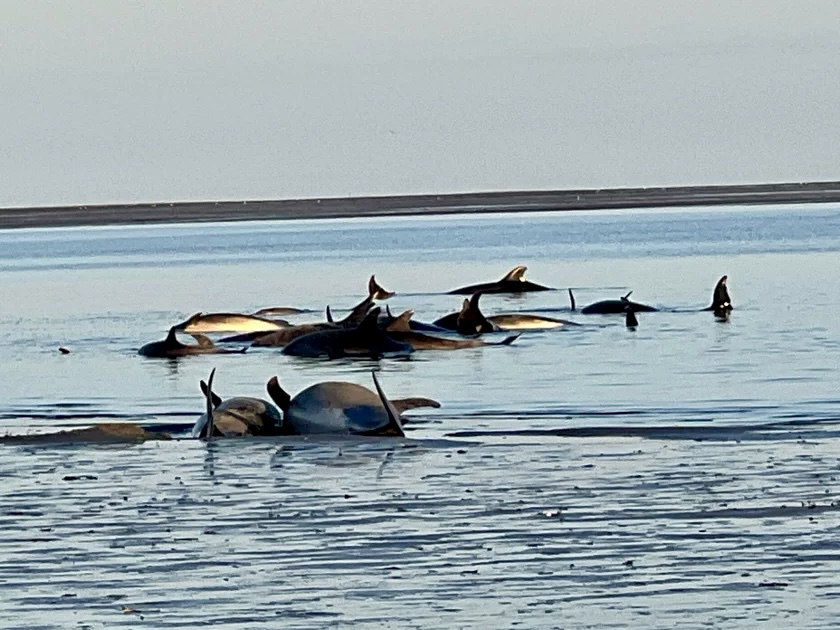
Throughout the operation, many of the dolphins repeatedly returned to shallow waters, requiring responders to remain in the area through multiple tidal cycles as they worked to guide the animals safely back toward deeper water.
Responders used satellite tags placed on two rescued dolphins to relocate the group in deeper waters of Cape Cod Bay. Identification tags confirmed that many of the rescued dolphins were once again traveling alongside other bottlenose dolphins—a hopeful sign after days of intensive rescue efforts.
Cape Cod is a globally recognized hotspot for dolphin mass strandings. Its distinctive hook-shaped coastline, shallow bays, expansive tidal flats, and dramatic tidal changes can make navigation difficult for dolphins and leave them trapped when the tide rapidly recedes.
“This is a very stressful event,” said Dr. Sarah Sharp, IFAW’s lead veterinarian. “It’s incredibly complex to have multiple groups of animals spread across different locations, and the fact that they’re such large dolphins makes caring for them much more difficult. These are long days for our team, but harder still on the dolphins.”
IFAW’s marine mammal rescue team was supported by interns, more than 50 trained volunteers, and partners from AmeriCorps Cape Cod and Whale and Dolphin Conservation. Together, they monitored the dolphins, provided supportive care, and helped guide the animals toward deeper water.
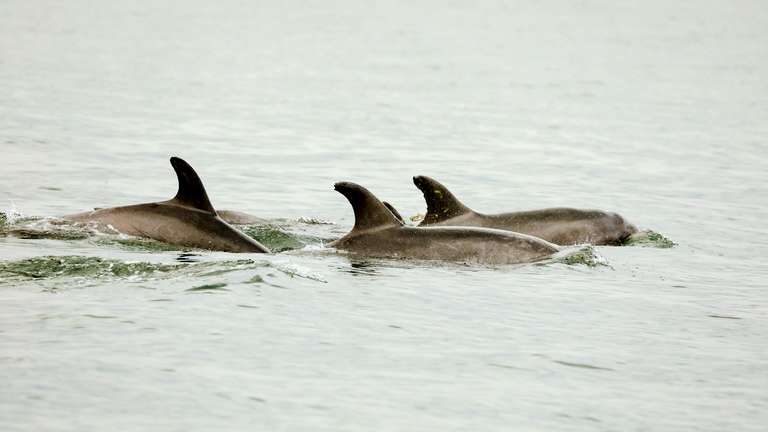
While not every dolphin survived, seeing many of the rescued animals reunited with other bottlenose dolphins in deeper water offers hope and highlights the tireless work of those who gave these stranded marine mammals another chance at survival.
Anyone who encounters a stranded marine mammal on Cape Cod should keep a safe distance and never attempt to return the animal to the water. Instead, immediately contact the IFAW Marine Mammal Stranding Hotline at 508-743-9548.
To report an entangled whale or sea turtle, whether alive or deceased, contact the Center for Coastal Studies Entanglement Hotline at 800-900-3622.